
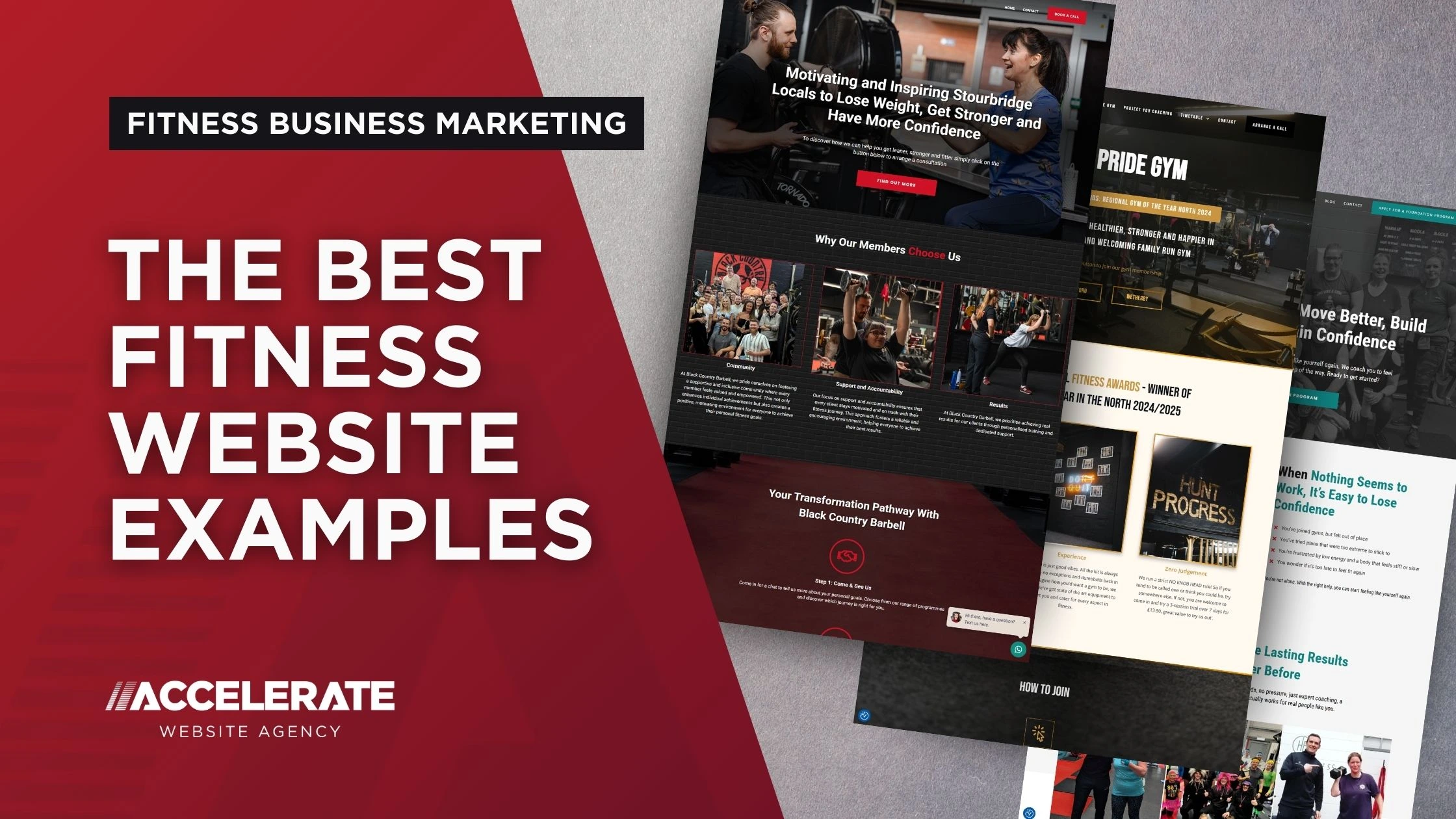
If you are looking for the best fitness website examples, you are probably not just searching for design inspiration, you are looking for websites that generate clients, members, and revenue.
This is where a more structured fitness marketing system becomes important, as design alone rarely drives consistent enquiries.
The truth is, most “best fitness website” lists are wrong.
They rank sites that look good, not sites that sell well.
In this guide, we break down what the top performing gym, personal trainer, and online coaching websites actually do, and how you can model them.
What Makes a Fitness Website One of the Best?
A high performing fitness website is not judged by how it looks.
It is judged by what it does.
The best fitness websites:
- Generate consistent leads
- Book consultations
- Sell programmes
- Build trust quickly
- Work well on mobile
- Scale with ads and SEO
If a website does not do these things, it is not elite, it is just decoration.
This level of performance is usually supported by both design and visibility, often combining conversion-focused builds with fitness SEO strategies to sustain growth.
Example 1: The High Converting Gym Website
What it looks like
- One clear offer, such as a free trial, six week challenge, or intro session
- A bold call to action above the fold
- A simple booking form
- Local proof, including Google reviews, member photos, and results
Why it converts
People do not have to guess what to do.
They see the offer, click, book, and show up.
- Gym website example gallery
- Local gym reviews section
Example 2: The Personal Trainer Website That Attracts Premium Clients
What it looks like
- Clear niche positioning, not “I train everyone”
- Transformation focused copy
- One main call to action, Book a Free Strategy Call
- Testimonials and results near every decision point
Why it converts
It filters out price shoppers and attracts people who are ready to invest.
- PT website examples
- Before and after client results
Example 3: The Online Coaching Website That Sells on Autopilot
What it looks like
- A long form sales page
- Clear problem, solution, and outcome messaging
- Checkout or call booking system
- Email and SMS automation
Why it converts
It works even when the coach is offline.
- Online coaching funnel examples
- Programme sales pages
Example 4: The Hybrid Fitness Business Website
These are some of the strongest websites in the industry.
They combine:
- Local gym pages
- Online coaching offers
- Booking systems
- Automated onboarding
They do not rely on one income stream, they scale across multiple.
- Hybrid fitness website examples
What All the Best Fitness Websites Have in Common
No matter the business model, the best fitness websites always share these traits.
1. One Clear Goal
Not “learn more”.
Not “contact us”.
But:
- Book a call
- Claim a trial
- Buy a programme
2. Strong Positioning
They speak to a specific person with a specific problem.
3. Proof Everywhere
- Before and after photos
- Reviews
- Testimonials
- Case studies
4. Speed and Mobile Optimisation
Most fitness leads come from phones.
5. Follow-Up Systems
Email and SMS stop leads from disappearing.
These principles are part of a wider set of website design and conversion strategies that focus on turning traffic into actual clients.
Why Most Fitness Websites Do Not Look Like These
Because most are built by:
- Generic web designers
- Template marketplaces
- Marketing agencies that do not understand fitness
They do not build sales systems.
They build pages.
The best fitness websites are built by specialists who understand:
- Coaching psychology
- Local lead flow
- Trial to membership to retention
Want a Fitness Website Like These?
You do not need a better logo.
You need a better conversion system.
If you want a website that:
- Brings in leads
- Books sessions
- Sells programmes
- Scales with ads and SEO
Take the free Fitness Website Scorecard to see how close your current site already is, and where the gaps are.
Many of these gaps come down to missed fundamentals, including structure and messaging, which are explored further in how to tell if your fitness website is losing you leads.